
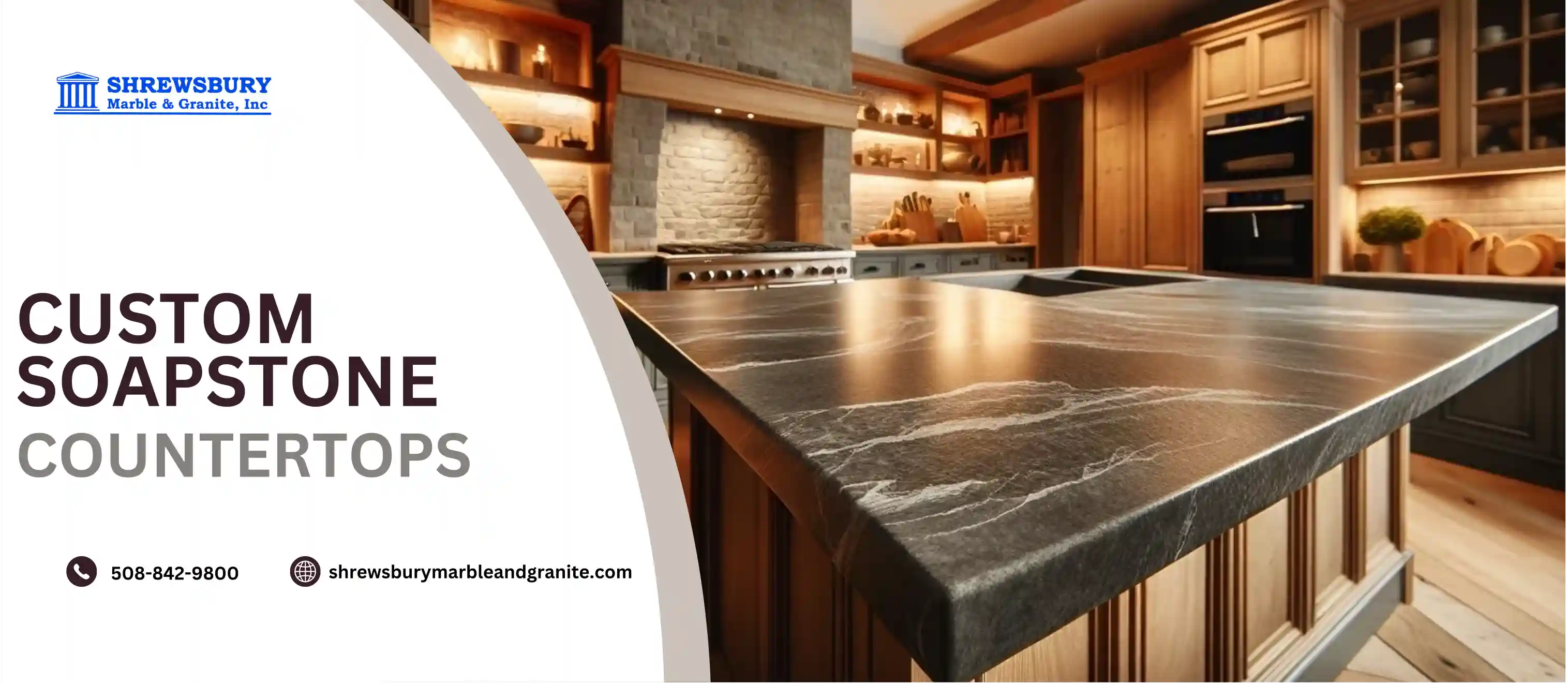
Homeowners often buy kitchen materials based entirely on pictures in design magazines. They install beautiful white stones without realizing how easily red wine stains it. Cooking heavy meals requires a workspace that actually fights back against spills and heat. Installing custom Soapstone countertops gives your kitchen a massive physical advantage over standard materials. Shrewsbury Marble & Granite fabricates this specific natural rock for homes across Worcester County. The team builds exact layouts that survive decades of heavy daily use.
People hear the word soap and immediately assume the stone is weak. The rock actually contains high levels of natural talc. This specific mineral makeup makes the surface feel slightly soft to the touch. The actual internal structure of the stone is incredibly dense.
It is physically denser than most granite slabs. Because the internal structure is completely packed together, Soapstone countertops do not absorb liquids. You do not have to worry about raw chicken juice or dark coffee sinking into the material. The rock naturally repels the moisture.
Standard engineered quartz contains plastic resin. Putting an extremely hot cast-iron skillet on quartz will melt that resin instantly. You always have to use a trivet. This rock ignores extreme temperatures completely.
The material naturally absorbs and dissipates raw heat. You can pull a boiling pot of pasta water straight off the stove and drop it directly onto your Soapstone countertops. The rock will not crack, scorch, or discolor. Homeowners across Massachusetts who do heavy holiday cooking rely on this extreme thermal resistance to speed up their meal prep. The fabrication team at Shrewsbury Marble & Granite regularly recommends this exact material for busy kitchens.
Natural granite requires strict yearly maintenance. You have to buy liquid chemical sealers and wipe them into the stone to protect it. Failing to do this ruins the counter over time.
Because quality Soapstone countertops are completely non-porous, they never require chemical sealers. The surface is naturally closed off at the microscopic level. This makes the material highly sanitary and completely safe for rolling out pastry dough or chopping vegetables directly on the bare slab.
Comparing common Kitchen surfaces:
| Material Feature | Soapstone | Engineered Quartz | Natural Granite |
|---|---|---|---|
| Heat Limit | Extreme (Can take direct hot pans) | Low (Requires metal trivets) | High (Can crack under sudden thermal shock) |
| Chemical Sealer | Never required | Never required | Required every twelve months |
| Scratch Repair | Fixable at home with basic sandpaper | Requires professional grinding | Requires professional grinding |
The stone changes visually over time. Fresh slabs usually feature a light gray color with white veining. Exposing the stone to oxygen and the natural oils from your hands causes it to darken gradually. You can control this process entirely.
Many people wipe standard food-grade mineral oil across their Soapstone countertops to force the stone into a deep charcoal or black color. If you want the dark look, you simply rub the oil in once a month. If you want to keep the light gray look, you just wash the stone with standard soap and water and leave it alone.
Heavy metal pots will eventually scratch the surface. This is a normal part of owning the material. Fixing a scratch on standard stone requires calling a masonry crew with heavy polishing grinders.
You can fix Soapstone countertops yourself in about three minutes. You take a piece of standard 120-grit sandpaper and lightly rub the scratch in a circular motion. You wipe the dust away, apply a single drop of mineral oil, and the scratch completely vanishes. You control the maintenance without ever paying a service fee.
Building a custom kitchen layout takes exact math. When property owners hire Shrewsbury Marble & Granite, the installation crews bring digital laser equipment into the house to template the exact dimensions of the base cabinets. The team takes those digital files back to the fabrication shop in Shrewsbury.
The shop runs massive water-cooled bridge saws to cut the raw slabs perfectly straight. The water keeps the diamond blades cool and stops heavy stone dust from filling the air. The fabricators grind the edge profiles down and cut the exact hole for the sink basin before the rock ever gets loaded onto the delivery truck.
The reality of kitchen maintenance requires planning ahead. Buyers always have questions about maintaining Soapstone countertops before committing to a new material. Here is how this specific rock handles standard kitchen accidents.
Yes. The stone has absolutely zero microscopic pores. Liquids physically cannot penetrate the surface layer. You can leave a puddle of dark red wine on the stone overnight and simply wipe it away with a wet rag the next morning.
The edge might take a small chip. Because the material is slightly softer than granite, heavy blunt force can dent the edges. We slightly round the edges during the fabrication process to help deflect those exact types of impacts.
No. You just use standard dish soap and warm water. Harsh bleach or ammonia will just strip away the mineral oil and force you to reapply it sooner.
Stop worrying about ruining your kitchen every time you cook a heavy meal. You need a physical workspace built to handle raw heat and acidic spills. Upgrading to custom Soapstone countertops gives your house a permanent, heavy-duty prep zone.
Shrewsbury Marble & Granite manages the entire process from the initial laser template to the final installation for properties across Central Massachusetts. Contact our main office today to check our current slab inventory and schedule your initial layout measurement.