
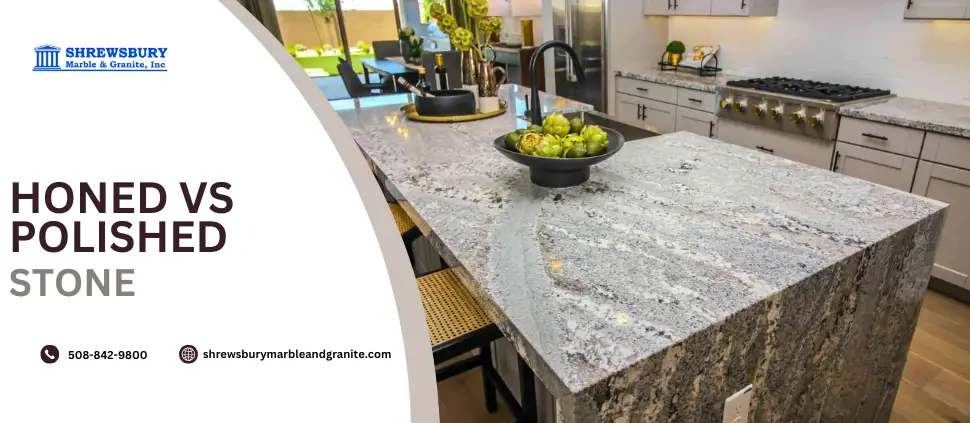
Selecting a custom countertop involves analyzing the physical properties of the raw material. Property owners face a direct choice between high-gloss reflections and flat, satin textures. When looking directly at Honed vs Polished Stone, buyers must weigh daily cooking habits against the specific maintenance requirements of the slab. Fabricators at Shrewsbury Marble and Granite cut these raw materials using heavy industrial machinery. The stone experts at the facility deliver precision surface textures based entirely on household usage and design preferences.
Fabricators use heavy rotating machines equipped with fine diamond abrasive pads to grind a raw stone slab. This intense physical friction slowly closes the natural microscopic pores of the material. It creates a completely flat, highly reflective surface.
The closed pores give glossy granite and marble excellent resistance to liquid stains. Spilled wine and cooking oils sit on top of the tight surface layer for a longer period before soaking in. That mirror effect comes with a major drawback. You see every single dried water drop and greasy fingerprint from across the room. Keeping a glossy counter clean means wiping it down constantly with specialty glass sprays.
Understanding the exact terminology helps property owners make informed material decisions before purchasing a slab.
| Fabrication Term | Physical Definition | Primary Impact on Countertops |
|---|---|---|
| Material Porosity | The amount of empty microscopic space within a stone. | Determines how quickly a liquid spill turns into a permanent dark mark. |
| Diamond Grit Level | The literal sandpaper rating of the grinding pads. | Controls exactly how much light the final slab bounces back into the room. |
| Chemical Impregnators | An industrial fluid poured over the slab to plug up the microscopic holes. | Creates an invisible barrier to block heavy oils and water from soaking in. |
The manufacturing process stops before the final polishing stage to create a matte texture. This leaves the surface with a smooth, satin feel completely devoid of any shine. Comparing Honed vs Polished Stone, the flat finish masks heavy knife marks and sliding pan scuffs perfectly.
Matte surfaces absorb overhead light completely to create a softer visual profile in the room. Stopping the grinding process early leaves the microscopic pores of the stone slightly more open. Liquids penetrate a matte surface much faster than a glossy one. Homeowners must apply industrial chemical sealers on a strict schedule to block dark liquids from soaking deep into the stone.
Natural marble contains high levels of calcium carbonate. This specific mineral reacts violently to acidic liquids like lemon juice, vinegar, and tomato sauce. The acid physically eats away the top layer of the stone upon contact. This chemical reaction is known as etching.
Etching physically destroys the shiny top layer of a glossy countertop. A spilled glass of lemonade leaves a dull, highly visible white mark on a dark polished slab. A flat, satin finish camouflages these chemical reactions effectively. The dull etch mark blends directly into the surrounding matte texture. Evaluating Honed vs Polished Stone requires matching the room's primary function to the material. High-traffic kitchens utilizing heavy acidic ingredients benefit massively from the forgiving nature of a flat finish.
Here is a look at how these two distinct manufacturing styles compare directly during daily use:
| Surface Characteristic | The Polished Finish | The Honed Finish |
|---|---|---|
| Light Interaction | Reflects overhead lighting heavily. | Absorbs light to create a soft, flat appearance. |
| Scratch Visibility | Exposes tiny scratches and fingerprints immediately. | Hides daily physical wear and minor kitchen scuffs perfectly. |
| Defending Against Spills | Forces wine and oil to sit on the surface. | Open pores require strict adherence to chemical sealing schedules. |
| Managing Acid | Acidic spills leave highly visible dull spots. | Blends chemical etch marks into the natural matte texture. |
Property owners usually ask specific maintenance questions during their initial showroom consultations.
Liquids penetrate flat, satin finishes quickly because the natural pores of the material remain wide open. Fabricators combat this by applying heavy impregnating sealers to the slab before installation. Reapplying this chemical sealer annually creates a rigid barrier that keeps dark liquids from soaking into the material.
Resurfacing an installed slab inside a finished kitchen creates an unmanageable mess due to the required water and stone dust. Fabricators apply the specific surface texture at the primary shop before delivering the final pieces to the property.
High-acid formulas strip away the protective sealant and physically eat into the calcium carbonate. Daily cleaning requires pH-neutral soaps designed specifically for natural stone applications.
A shiny tile turns into an ice rink the second it gets wet. You need a rough, unpolished floor to prevent slipping when walking barefoot. Builders strictly use matte textures for walk-in showers to prevent serious falls.
Designers frequently mix surface textures to define specific functional zones. Placing a flat, satin finish on the main prep island hides the heavy cooking wear. Installing a high-gloss finish on the perimeter cabinets creates an elegant, reflective border around the room.
Selecting the right surface texture dictates your daily cleaning routine for years to come. Finalizing your decision on Honed vs Polished Stone requires handling the actual slabs in person. Contact the fabrication facility at Shrewsbury Marble and Granite to review the physical differences directly. The masonry team handles the entire cutting and sealing process. Photographs on a computer screen distort the natural veins of the stone. You need to see the actual slabs in person. Call the main office to walk through the active warehouse inventory.