
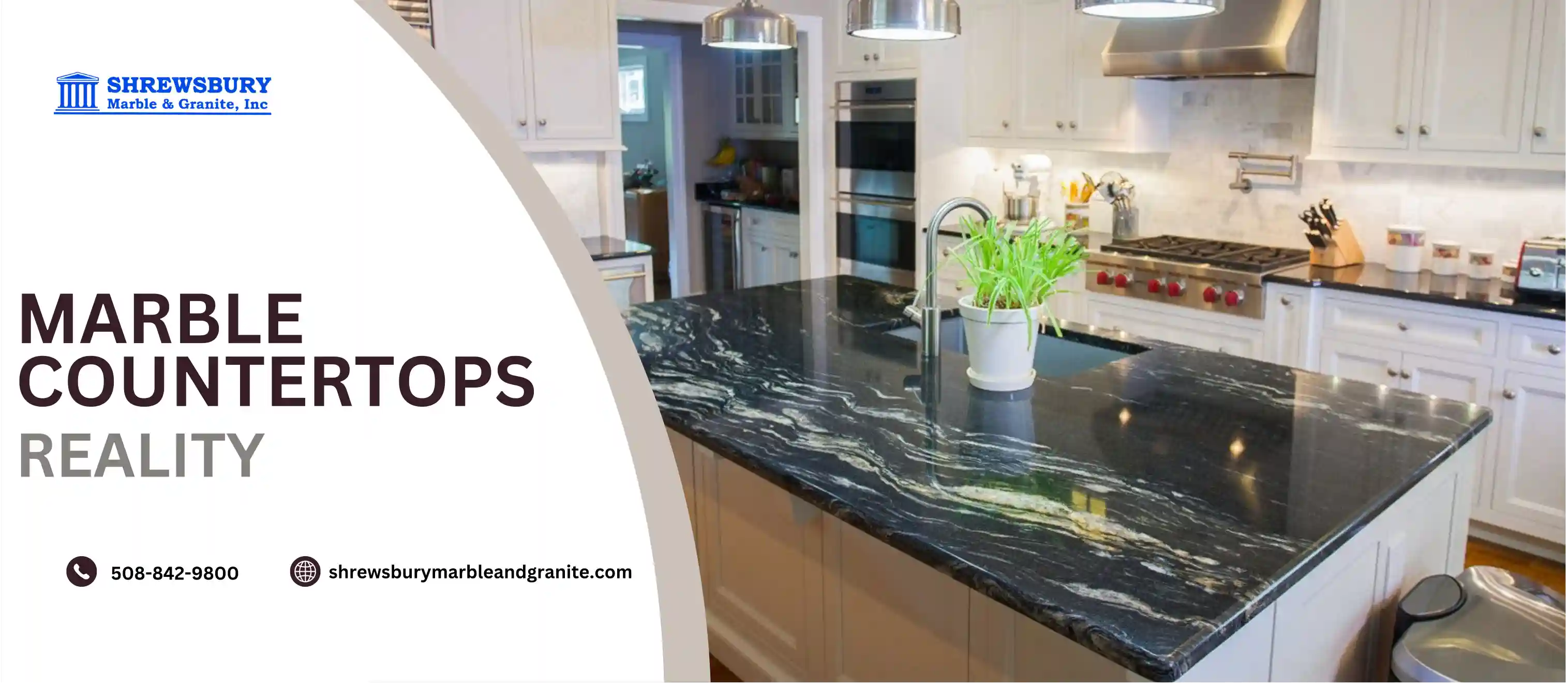
People see a picture in a design magazine and immediately decide they want a bright white kitchen. They order the stone without actually understanding how it reacts to a busy household. Natural rock requires a specific daily routine. Installing Marble Countertops gives you a classic, unmatched aesthetic, but it also means you have to change how you prepare food. Shrewsbury Marble & Granite fabricates and installs these specific slabs for local homes. We make sure property owners know exactly what they are buying so they know how to protect their investment.
The biggest surprise for new owners is a process called etching. You can wipe up a spill perfectly, but the damage might already be done. Lemons, vinegar, and tomato sauce are highly acidic.
When acid hits the calcium inside this specific stone, it creates an instant chemical reaction. The acid literally eats away the top layer of the polished finish. This leaves a dull, cloudy spot on the counter. You cannot just wipe an etch mark away with soap and water. It is a physical burn into the stone itself. Removing a deep etch mark requires calling a professional polishing crew to grind the surface down. Homeowners must use thick cutting boards and wipe up acidic spills immediately.
Because this rock is organic, it is full of microscopic holes. Dropping heavy liquids like red wine or dark olive oil directly on the bare stone is a massive mistake. The liquid will sink straight down into those tiny holes and stain the counter from the inside out.
Preventing this takes strict routine maintenance. You have to apply a liquid chemical sealer to the surface at least once a year. The liquid sealer sinks down into the pores, hardens, and physically blocks other liquids from entering. Staying on top of this yearly sealing schedule is mandatory if you want the stone to keep its original color.
Despite the strict maintenance requirements, professional bakers and heavy cooks still actively seek this material out. The stone naturally holds a temperature well below the ambient room temperature.
Rolling out pie crusts or heavy pastry dough on a cold surface keeps the butter inside the dough from melting. The dough stays firm and workable. This specific physical trait makes the stone a highly functional workspace for baking. It does not conduct heat quickly, giving cooks a massive advantage when doing heavy prep work.
Comparing Common Kitchen Surfaces
| Material Trait | Natural Marble | Natural Granite | Engineered Quartz |
|---|---|---|---|
| Porosity Level | Highly open (Needs strict sealing) | Slightly open (Needs yearly sealing) | Completely closed |
| Reaction to Acid | Will etch and dull instantly | Highly resistant | Highly resistant |
| Surface Temperature | Naturally cold to the touch | Standard room temperature | Standard room temperature |
| Scratch Resistance | Relatively soft | Extremely hard | Extremely hard |
You have to accept that this material will change over time. It is significantly softer than granite. Dragging heavy cast-iron skillets across the surface will leave minor scratches. The edges might take small chips if you drop a heavy ceramic bowl directly on them.
Over decades of use, the stone builds a natural patina. It loses its factory-perfect shine and takes on a softer, lived-in look. Many historic homes embrace this exact aging process. If you want a counter that looks identical ten years from now, you need engineered quartz. If you want a surface that ages alongside your house, you buy natural stone.
Building these surfaces requires massive industrial equipment. At Shrewsbury Marble & Granite, we do not guess the measurements. Our crews template your existing cabinet layout using digital laser equipment.
We take those precise measurements back to our fabrication shop. We cut the raw slabs using heavy, water-cooled bridge saws to ensure perfectly straight lines without overheating the rock. We cut out the exact dimensions for your specific sink and grind the edge profiles down until they are completely smooth. We handle the heavy manufacturing before the stone ever arrives at your house. Contact our main office today to view our current slab inventory and start planning your kitchen layout.
You should always use a metal trivet. While the stone itself is highly heat resistant, placing a screaming hot pan directly on the surface can cause "thermal shock," which may crack the rock or burn away the chemical sealer you applied.
Most residential kitchens require a fresh coat of liquid sealer once every twelve months. Heavy-use kitchens might need it applied every six months. The process only takes a few minutes and a clean rag.
A honed finish means the stone has a matte, unpolished look. While it absolutely does not stop the chemical etching process, the dull finish naturally hides the etch marks much better than a high-gloss polish does.