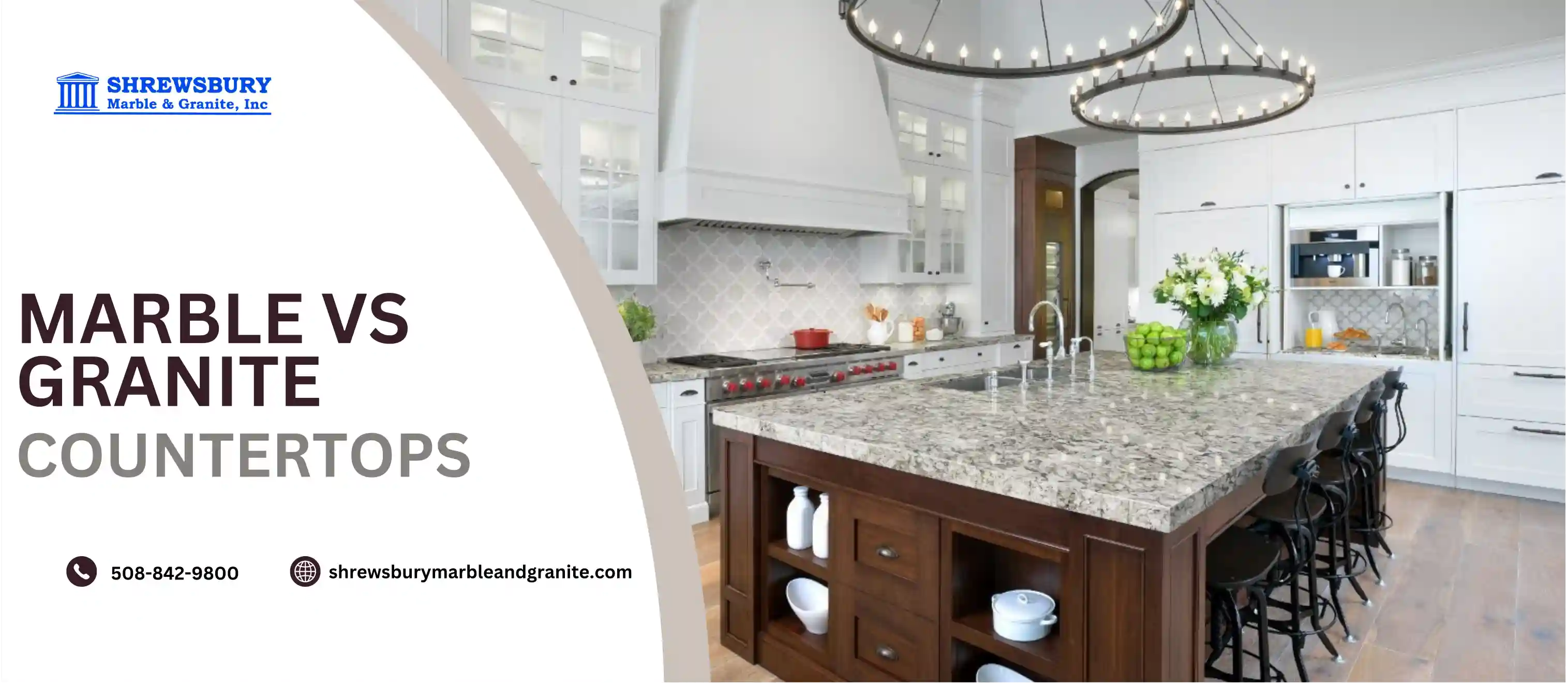
Replacing your countertops changes how your kitchen works every single day. The surface takes on heavy cooking activity while completely defining the look of the room. Natural stone always comes up as a top choice for remodeling projects because it actually lasts.
Many homeowners in Shrewsbury consider both marble and granite when planning a kitchen remodel. Both materials bring strong physical benefits to the table. Properties in Worcester County vary widely, ranging from older colonial houses to newly built homes. Here, buyers need experts in this field like Shrewsbury Marble and Granite to guide them towards the material that actually fits their specific layout and handles heavy daily use without breaking down.
What are Marble Countertops?
Marble starts out being deep underground as limestone where intense heat and heavy physical pressure cause the minerals to recrystallize over thousands of years. This produces a dense slab with a very smooth finish. It also traps natural mineral deposits. Those deposits create the veining you see in the stone, so you will never find two identical slabs anywhere.
The light colors often found in marble can help make a room feel brighter and more open. Homeowners strongly prefer it for baking stations because the stone remains physically cold. Marble's naturally cool surface makes it a popular choice for baking. Marble is commonly used for bathroom vanities, shower walls, and backsplashes when properly sealed.
What are Granite Countertops?
Granite forms as an igneous rock. Magma cools far below the surface of the earth over a very long time, packing quartz, feldspar, and mica tightly together. This slow cooling cycle creates a rigid and granular internal structure. The heavy mineral composition makes granite one of the most durable countertop materials available today.
Granite Granite is highly resistant to everyday wear and impact. Houses across Massachusetts use granite for primary kitchen counters, outdoor prep areas, and high traffic utility spots. The stone performs well in busy kitchens and resists damage from everyday use.
Marble vs Granite: Key Comparison
Appearance
- Color variations: Marble usually features a kind of stark background and so, the buyers mostly find crisp whites, soft grays, and deep blacks. Granite is available in a wide range of colors, including earth tones, greens, blues, and grays.
- Veining and patterns: Sweeping lines will stretch fluidly across the marble slabs. Granite carries a tight speckled texture, which happens because of how the minerals clustered together millions of years ago.
- Design flexibility: Marble complements both traditional and contemporary design styles.
Granite works well in a variety of kitchen styles, including farmhouse and contemporary designs
Durability
- Scratch resistance: The massive quartz content inside granite makes the stone highly resistant to metal utensils. Marble is physically much softer. Cooks absolutely must use cutting boards to keep knives from scoring the surface.
- Heat resistance: Both stones handle high temperatures exceptionally well. Cooks can set hot pans on either material for short periods without causing thermal shock.
- Longevity: Both options will last for decades. Granite keeps its factory polish longer even when put under heavy cooking stress. Marble ages up naturally as the stone takes on a physical patina from daily use over the years.
Maintenance
- Cleaning requirements: Mild soap and warm water work best for both materials. Keep acidic chemicals far away since they strip the protective finish right off the stone.
- Sealing needs: Installers apply a high-quality sealant right away. Granite needs a fresh coat maybe every one or two years. Marble is highly porous. Owners have to stay on top of the schedule and reseal the stone strictly every six to twelve months.
- Stain resistance: Granite naturally blocks liquid spills. Marble reacts very quickly to acidic liquids like lemon juice, wine, or vinegar and so their owners must always be ready for cleaning up spills right away to prevent permanent etching.
Which Countertop is best for your Home?
Discuss based on:
- Family lifestyle: A busy house puts serious physical stress on a kitchen. Granite absorbs heavy impacts and fights off daily spills easily.
- Cooking habits: People that frequently bake pick marble specifically for its cold surface. People who cook with heavy skillets and acidic ingredients lean heavily toward granite.
- Design preferences: The buyers who are chasing a clean flow will look for marble. People who want deep textures will choose granite.
- Budget considerations: Both materials cost more than synthetic options. Rare Italian marble slabs almost always carry a higher price tag than standard granite cuts.
Why Shrewsbury Homeowners choose Natural Stone Countertops
- Classic beauty: Natural stone brings an organic look to a house. Heavy mineral patterns add real physical character to a room.
- Increased home value: Marble and granite countertops may increase a home's appeal and perceived value. Worcester area buyers look closely at natural stone surfaces as a clear sign of premium quality.
- Investment that lasts long: Both materials can last for decades when properly maintained.
Expert Tips before buying Countertops
- Measure your space properly: Property owners calculate the exact square footage of a project to figure out material costs accurately.
- View full slabs before selecting: A small sample block will never show the massive color variations found in the actual slab. Viewing the full slab helps buyers understand the natural color and pattern variations.
- Consider maintenance requirements: Look closely at the actual upkeep schedule. Choose a stone matching the amount of physical work the household plans to do.
- Work with experienced countertop professionals: Always hire a dedicated fabrication team to manage the templating, heavy cutting, and final placement.
Why choose Shrewsbury Marble & Granite?
- Custom fabrication: Shrewsbury Marble & Granite cuts raw slabs locally to fit exact project dimensions.
- Professional installation: A real professional installation service guarantees flat joints and maximum structural safety inside any Massachusetts home.
- Wide selection of marble and granite options: Customers walk the local yard and pick their exact stone from a massive inventory.
- Local expertise and customer service: The local staff handles every single phase of the project with direct technical skill. They bring decades of actual stone fabrication experience to the local market.
Conclusion:
Marble hands a kitchen a bright visual anchor. It stays physically cold for baking but needs a strict maintenance routine. Granite offers excellent scratch resistance. The deep colors handle heavy daily cooking. Matching the stone to the actual cooking habits of the house helps buyers make a factual decision. Contact Shrewsbury Marble & Granite for professional advice and a personalized project quote.
Frequently Answered Questions (F.A.Q.s):
Is marble or granite better for kitchen countertops?
Granite is known to resist scratches and stains better during heavy cooking. Marble works perfectly for baking stations but also requires a stricter upkeep schedule.
Which countertop material lasts longer?
Both stones last for decades. Granite holds a factory shine longer. Marble develops a physical patina as it ages.
Does granite require maintenance?
Yes. Owners clean granite daily with mild soap and reseal the surface every one to two years.
Are marble countertops worth the investment?
Marble adds major financial value to a property. The premium look remains a top feature for house buyers.
How much do marble and granite countertops cost in Massachusetts?
Prices depend on stone rarity, edge profiles, and square footage. Both stones function as a premium structural upgrade.