
Most homeowners walk into a fabrication yard and focus entirely on color. They tap the surface, check the shade against a cabinet sample, and make their choice. The physical material you choose actually dictates exactly how you cook in your own house.
Different stones react to the physical world in different ways. Natural rocks like marble and granite are organic materials that breathe and interact with their environment. That organic nature is part of their traditional appeal. If your household requires a surface that ignores spilled wine and acidic liquids without a routine care schedule, you need an engineered option. Installing Quartz countertops means choosing a manufactured product built specifically to handle heavy, messy food preparation. Shrewsbury Marble & Granite fabricates and installs both natural and engineered materials to give homeowners exact control over their kitchen workspace.
To understand why this material performs the way it does, you have to look at how it is built. Granite and soapstone are sliced directly out of the earth in massive blocks. Engineered quartz is built from scratch in a factory.
The material consists of roughly ninety percent crushed natural stone dust. The remaining ten percent consists of plastic resins and color pigments. The factory mixes these raw materials together, extracts the air using a heavy vacuum, and bakes the slab under intense pressure.
You are buying a highly controlled composite. That specific mix of crushed rock and plastic resin completely dictates how the surface reacts to daily kitchen use.
Because natural stone is organic, it contains microscopic pores. Many homeowners embrace this, taking time to apply professional sealers to their granite or marble to protect the stone. It is a standard, expected routine of home maintenance.
The plastic resins in engineered stone create a completely different physical structure. During the baking process, the resin melts and fills every single microscopic gap between the crushed rock. The final slab has absolutely zero pores.
Because the surface is entirely closed off, liquids physically cannot penetrate the material. You can spill heavy olive oil, highly acidic lemon juice, or dark turmeric powder on the counter and leave it there. You just wipe it away with a wet cloth later. The plastic barrier prevents the pigment from taking hold. For busy households that want to skip the routine of applying stone sealers, this engineered barrier provides a highly practical workspace.
Natural stone is famous for its unique variations. The veining in a marble slab zigs and zags randomly, meaning no two kitchens will ever look exactly alike.
Specific modern kitchen layouts require strict pattern uniformity. Because Quartz countertops are mixed in a factory, the color patterns are controlled by a computer. If you want a bright white surface with thick, highly uniform gray veins, the factory produces it to an exact specification.
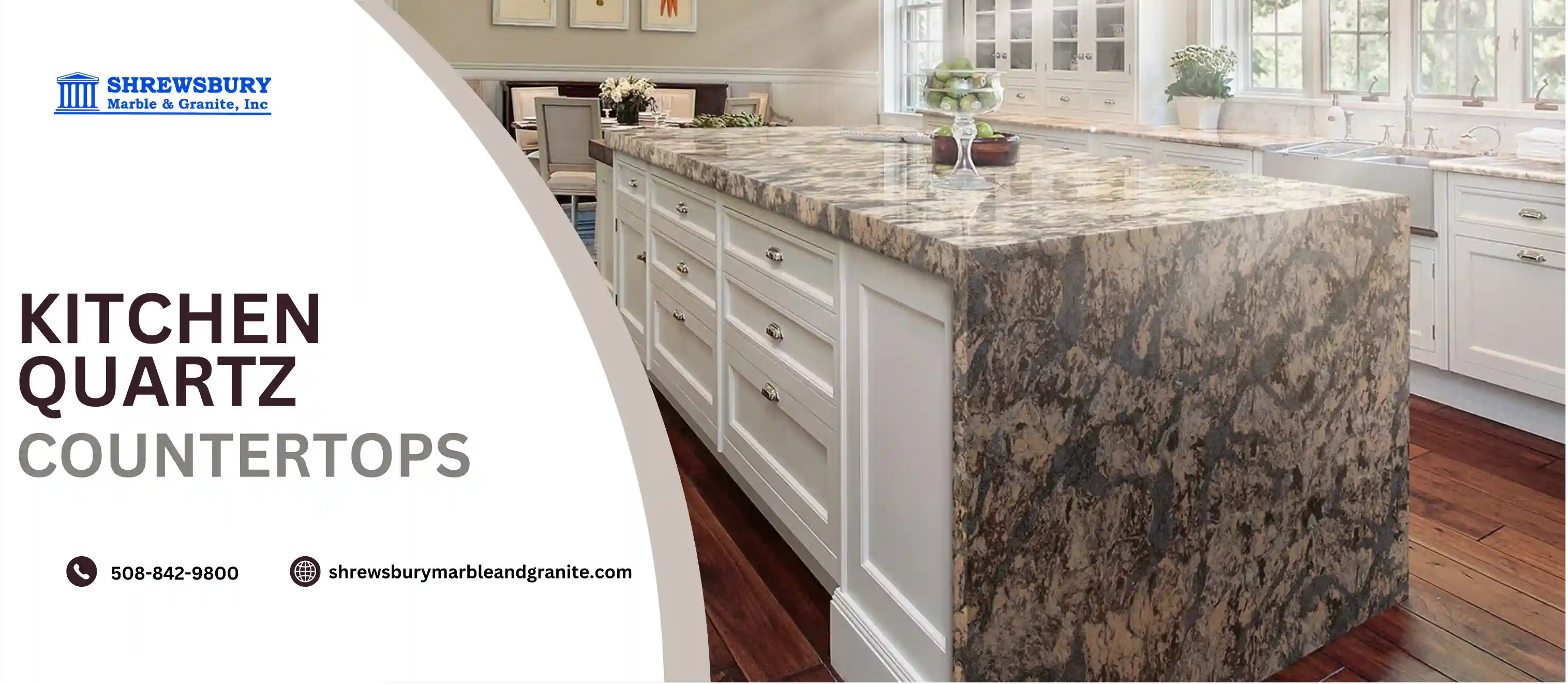
This predictability is incredibly useful for specific designs. A major trend right now is the waterfall edge, where the countertop drops off the side of the island and runs all the way down to the floor. To make this look right, the veins on the top surface must perfectly align with the veins running down the side. Matching those complex patterns is highly efficient when dealing with manufactured slabs.
Comparing Material Behaviors
| Physical Trait | Engineered Quartz | Natural Granite | Natural Marble |
|---|---|---|---|
| Pore Structure | Completely closed by resin | Naturally open | Naturally open |
| Maintenance Routine | Wipe with soap and water | Yearly liquid sealing | Strict yearly liquid sealing |
| Pattern Consistency | Highly controlled and uniform | Uniquely varied | Uniquely varied |
| Stain Resistance | Ignores heavy liquids | Highly resistant when sealed | Requires prompt spill cleanup |
Every building material has a physical breaking point. A trustworthy fabrication shop will always tell you exactly how you can accidentally damage your investment. For engineered stone, the main enemy is extreme heat.
Remember that ten percent of the slab consists of plastic resin. Plastic reacts poorly to sudden, extreme temperatures. A thick slab of natural granite can easily absorb the heat from a hot pan. Placing a screaming hot cast-iron skillet directly onto an engineered island will cause permanent damage.
The extreme temperature physically burns the resin binders. This leaves a cloudy, scorched ring embedded directly in your counter. You cannot polish a deep burn mark out of this material. You must always use a metal trivet or a thick hot pad when taking pans out of the oven to protect the surface.
Cutting engineered slabs requires the exact same heavy industrial tooling used for natural stone. At Shrewsbury Marble & Granite, we use massive, water-cooled bridge saws to cut your specific layout. The water keeps the diamond blades from overheating while preventing heavy dust from filling the air in the shop.
We map out your kitchen using digital laser templates so the final stone drops perfectly over your base cabinets. We cut the sink holes, grind the edge profiles completely smooth, and deliver the finished pieces directly to your house.
Selecting a countertop means balancing your aesthetic goals with your actual cooking habits. Contact our fabrication shop today to walk through our inventory, view both our natural and engineered slabs, and see exactly how these materials look in person.