
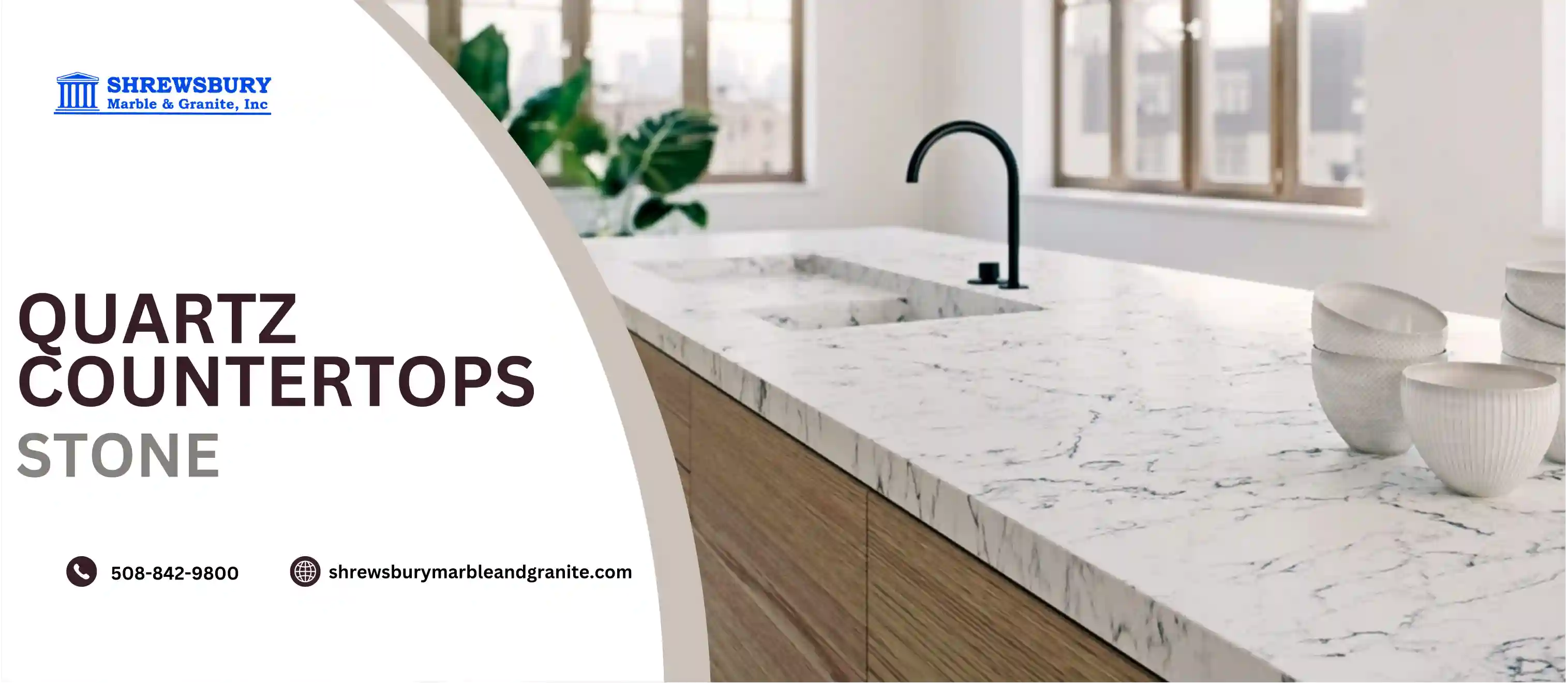
Picking a stone counter from a four-inch sample board can lead to surprises once a full slab goes into the kitchen. Quarried granite and marble shift in color and veining from one block of rock to the next. Engineered quartz keeps a consistent pattern across the whole surface. Homeowners comparing quartz countertops can view full slabs and 300 color options on display at Shrewsbury Marble and Granite in Shrewsbury, Massachusetts. The showroom carries slabs from major makers like Silestone and Caesarstone, along with Cambria, HanStone, and Spectrum, and handles every step from cabinet measuring to installation.
Granite and marble slabs are cut straight from quarries, which leaves tiny natural pores across the stone. Those pores soak up cooking oil or coffee unless the surface gets sealed on a regular schedule. Marble is also softer and reacts to acidic foods like lemon juice or tomato sauce, which etch dull spots into the polish.
Engineered quartz is built differently. Manufacturers blend around 90 percent crushed natural quartz with polymer resins and color pigments. The resin binds the crushed rock together and fills the spaces between the mineral grains. Because the finished slab is nonporous, spilled liquids stay right on top of the counter without soaking into the stone. Homeowners never have to buy liquid stone sealer or keep up with yearly resealing, which makes engineered stone practical for busy kitchens and bathroom vanities.
Shoppers looking at quartz countertops often notice a wide price gap between one slab and the next. Both pieces hold up the same way in daily use, since both share the same crushed quartz and resin makeup. According to Shrewsbury Marble and Granite's pricing breakdown, the price difference comes down to how complex the visual pattern is to produce.
| Quartz Price Tier | Typical Slab Cost per Sq. Ft. | Visual Style in the Room |
|---|---|---|
| Entry-Level Quartz | $50 to $70 | Solid whites, grays, or fine speckles for a quiet backdrop. |
| Mid-Range Quartz | $70 to $100 | Softer veining and blended shades such as warm beige or almond tones. |
| Premium Quartz | $100 to $200+ | Crisp, deep veining built to look like classic marble. |
Color choice also changes how a room feels. Bright white slabs bounce light around smaller kitchens. Dark styles like Absolute Night Quartz feature a black background with subtle texture and sparkle that stands out against light cabinets. Warm almond or limestone-look slabs pair naturally with wood cabinetry. Standard quartz slabs measure about 120 inches long, so a large kitchen island or a counter run past ten feet usually needs a seam where two pieces meet.
Ordering a custom counter starts with picking a slab color in the showroom and continues through on-site measuring. Once a homeowner chooses a material, a templater visits the house to take digital measurements of the installed cabinets. Before the shop saw touches the stone, the fabrication team places that digital layout over the slab so the homeowner can see how the pattern and seams will line up.
In the workshop, a saw directed by the digital template cuts the slab to fit the room. Fabricators then shape the outer border of the counter. A standard squared eased edge comes included in most base quotes, while decorative edges add to the cost by the linear foot:
Every opening for a sink or cooktop requires diamond cutting tools and adds about $100 to $300 per cutout. Taking out old countertops before the new stone goes in usually runs $150 to $400. Adapted delivery trucks then haul the finished pieces to the house, where the installation crew sets the stone level and joins any seams for $35 to $50 per square foot.
Even though quartz countertops resist food stains and small chips well, the surface still has a few limits in daily use. The polymer resin that binds the crushed stone cannot take direct heat from hot cookware. Setting up a hot skillet or baking sheet straight on the counter can scorch the resin and leave a permanent mark. Heat damages can be prevented when trivets or hot pads are kept near the stove.
Harsh household chemicals can also discolor the resin binder. Bleach and nail polish remover should stay off the stone, along with paint thinners. In rooms with large south-facing windows, years of direct sunlight can gradually shift the color of the slab. After installation is finished, the crew provides maintenance instructions, though daily cleanup only takes warm water and mild dish soap wiped with a soft cloth.
Homeowners planning a kitchen or bathroom remodel often ask a few practical questions before ordering custom stone.
Polymer resin fills the tiny gaps between the crushed quartz minerals during manufacturing. Because liquids cannot soak into the nonporous surface, homeowners never need to apply stone sealer after installation.
Crushed quartz rock handles heat well, but the resin binder mixed into the slab is sensitive to high temperatures. Pulling a hot pot off the burner and setting the metal straight on the counter can discolor or scorch the resin. Placing a trivet or hot pad under hot cookware protects the finish.
Slab pricing starts around $50 to $70 per square foot for simple patterns and climbs past $100 for bold marble-style veining. Final quotes also factor in sink cutouts and decorative edge profiles alongside the $35 to $50 per square foot installation labor.
A technician measures the kitchen cabinets after the base boxes are set in place. Shop staff then lay the digital template over the chosen slab so the homeowner can preview how the pattern and any seams will look before cutting starts.
Warm water and mild dish soap work to remove food spills without harming the surface. Strong chemicals like bleach or nail polish remover can damage the resin binder and leave dull spots on the stone.
Seeing full slabs in person makes it much easier to compare veining patterns and edge shapes before remodeling a kitchen or bath. If you are comparing quartz countertops for your home, Shrewsbury Marble and Granite has 300 quartz colors on display from leading manufacturers. Visit the Shrewsbury showroom to look through the slabs and get a detailed quote for your space.