
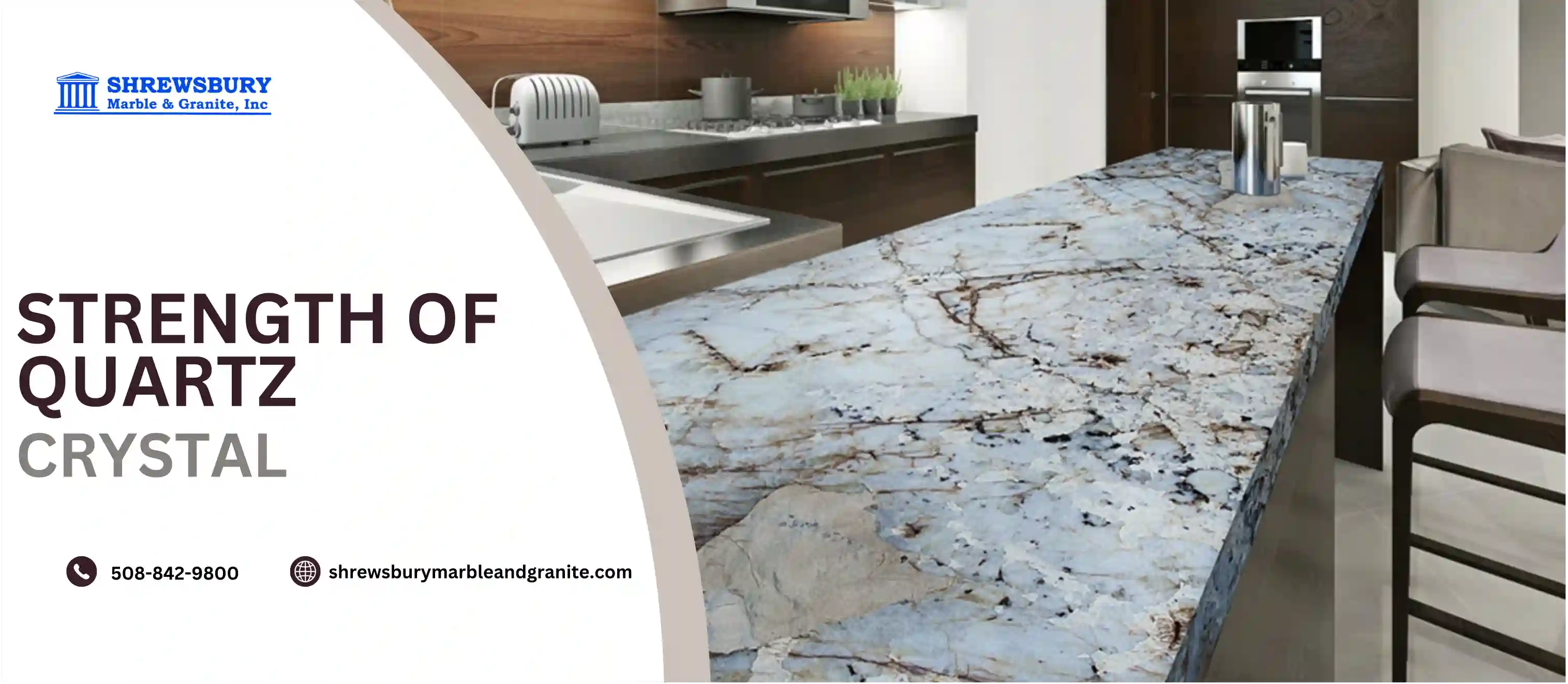
Kitchen counters take up heavy physical usage with daily wear and tear, from metal utensils as well as heavy cast-iron pots. Standard laminate and wood materials fail quickly because they lack foundational structural strength. Upgrading a cooking workspace requires materials built from the hardest elements on earth.
Manufacturers extract raw Quartz crystal from the ground and bind it under extreme pressure to create indestructible prep zones. Shrewsbury Marble & Granite fabricates and installs these engineered slabs for properties across Central Massachusetts. The team relies on this specific mineral composition to deliver heavy-duty, scratch-resistant workspaces that easily survive decades of daily cooking.
Geologists measure the scratch resistance of minerals physically by using the Mohs hardness scale. The scale runs from one to ten. Talc sits at the absolute bottom as the softest mineral. Diamonds sit at the very top as the hardest.
The geological strength of Quartz crystal ranks at a solid seven on this scale. This number carries massive practical value for a residential kitchen. Standard stainless steel kitchen knives rank around a five on the same scale. The structural math means a metal chef's knife physically cannot scratch the surface of the mineral. You can drag heavy metal pans directly across the counter without gouging the stone. The mineral physically blocks the abrasion.
Engineered stone often gets a bad reputation from people assuming it looks like flat, cheap plastic. This happens when manufacturers use low-grade resin and minimal actual stone. High-quality slabs consist of over ninety percent raw crushed rock.
The crushed Quartz crystal catches overhead kitchen lighting beautifully. The mineral naturally bends and reflects light rays. When embedded tightly inside a slab, these microscopic reflections give the countertop a deep, three-dimensional visual texture. This natural light refraction provides the authentic visual depth of traditional quarried stone without carrying the porous vulnerabilities of standard marble.
Taking crushed rocks and turning them into a perfectly flat countertop requires heavy industrial engineering. The factory takes the loose Quartz crystal and mixes it with a small percentage of colored pigment and polymer resin.
The machines pack this mixture into a mold and expose it to massive vacuum pressure and extreme heat. This violent process forces the resin into every single microscopic gap between the crushed rocks. The final product emerges as a completely solid, non-porous slab. Liquids physically cannot penetrate the surface. The barrier stops red wine, acidic lemon juice, and dark coffee from sinking into the material and causing internal stains.
Comparing Mineral Hardness Levels
| Mineral Type | Mohs Scale Rating | Reaction to Metal Knives |
|---|---|---|
| Calcite (Base of Marble) | 3 | Scratches deeply and easily |
| Standard Steel Cutlery | 5.5 | Will dull upon impact with harder stone |
| Embedded Crystal | 7 | Physically deflects sharp metal edges |
| Diamond | 10 | Cuts through all standard masonry materials |
Cutting a slab loaded with heavy Quartz crystal requires serious industrial tooling. Standard carpentry saws will completely shatter against the dense mineral.
The fabrication shop at Shrewsbury Marble & Granite runs massive, heavy-duty bridge saws equipped with industrial diamond blades. Diamonds are the only accessible material hard enough to slice through the dense rock smoothly. The machines pump a continuous stream of cold water directly over the blade during the cut. This prevents the friction from overheating the metal and stops heavy silica dust from filling the air in the shop. The fabricators at SMG use digital laser templates to map your exact cabinet footprint. They cut the sink holes and grind the edge profiles completely smooth before the stone ever leaves the facility.
Property owners upgrading their kitchen materials usually ask these mechanical questions before selecting a final slab.
The glossy finish is not a chemical spray that rubs off over time. It is a mechanical polish. The factory uses heavy polishing pads to grind the stone completely smooth. Normal daily wiping with soap and water will never dull that mechanical shine.
The stone will easily survive the metal blade without scratching. Chopping directly on the stone will immediately ruin your expensive kitchen knives. The rock is significantly harder than the steel, meaning it will roll the edge of your knife blade and make it completely dull after a few uses. Always use a wooden cutting board to protect your cutlery.
The embedded Quartz crystal completely ignores extreme heat. The ten percent plastic resin binder does not. Exposing the resin to a screaming hot cast-iron pan will cause a sudden thermal shock. This physically burns the resin and leaves a permanent cloudy mark on the counter. You must always use a metal trivet.
You are paying for raw physical durability. Laminate is essentially glued paper and particleboard that swells and rots the minute water touches the seams. Engineered stone provides a completely waterproof, structurally rigid surface that never needs replacing.
No. The factory baking process completely fills the natural pores of the stone with solid resin. Because there are zero microscopic holes in the surface, liquid chemical sealers cannot physically penetrate the stone. You just wipe the counter clean with a damp rag.
Relying on fragile materials forces you to constantly tiptoe around your own kitchen. You need a dense, friction-resistant workspace that handles the heavy impact of daily cooking. Relying on solid Quartz crystal gives you a heavy-duty prep zone that never requires chemical sealers. Contact Shrewsbury Marble & Granite today to review our active slab inventory. Let SMG upgrade your physical cooking environment with a digital measurement at your home in Shrewsbury.