
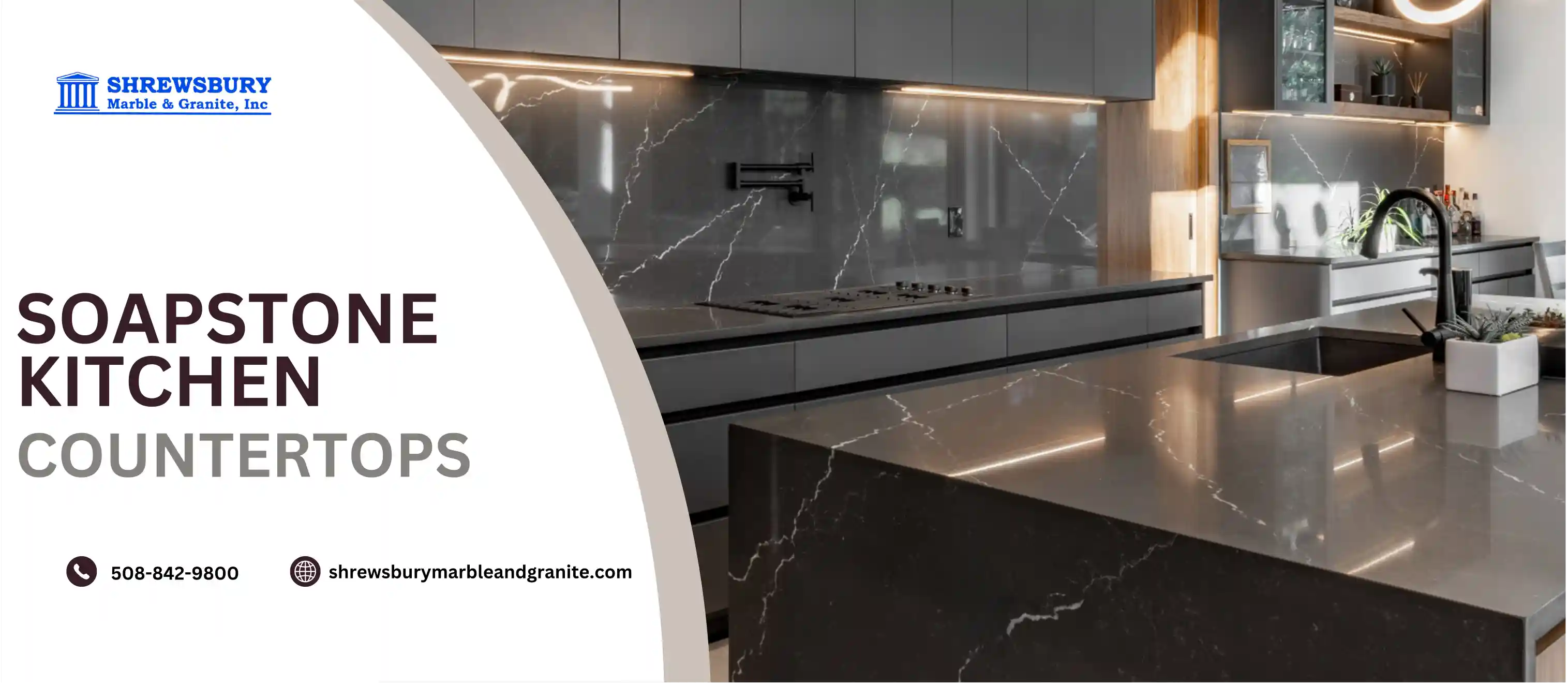
A kitchen workspace takes heavy physical wear every single day. Homeowners constantly drop heavy pots, spill acidic liquids, and drag metal utensils across their surfaces. When selecting a new material for a remodel, most people immediately look at basic granite or standard quartz. They completely overlook one of the most durable natural stones available.
Installing soapstone kitchen countertops gives you a surface that actually performs under extreme pressure. Shrewsbury Marble & Granite works directly with this specific material to build highly functional, heavy-duty prep spaces for local homes. We handle the custom fabrication so you get a surface that lasts for decades.
Soapstone is a naturally occurring metamorphic rock. It is quarried directly from the earth in large solid blocks. The stone itself contains a high percentage of natural talc. This specific mineral makeup gives the surface a slightly soft, soapy feel when you run your hand across it.
Despite feeling soft to the touch, architectural-grade soapstone is incredibly dense. It is actually denser than most granite slabs. That high density is exactly what makes it such a strong candidate for a busy kitchen environment.
Total Heat Resistance
A major problem with manufactured quartz is that hot pans will melt the plastic resins inside the counter. You always have to use a trivet. Soapstone handles heat completely differently. It is naturally heat resistant. You can take a cast-iron skillet directly off a high-heat stove and set it right down on the stone without leaving a scorch mark. The material simply absorbs and dissipates the heat safely.
Completely Non-Porous Surface
Marble looks beautiful, but it absorbs liquids quickly. If you spill red wine or lemon juice on a marble island, it will stain or etch the surface permanently. Soapstone is entirely non-porous. Liquids cannot physically penetrate the surface of the stone. This means you do not have to worry about sudden spills ruining your investment. It also means bacteria cannot hide inside the microscopic pores of the counter, making it a highly sanitary surface for raw food preparation.
When designing around soapstone kitchen countertops, you have to understand how the material ages. The stone naturally comes in lighter shades of gray with distinct white veining. Over time, exposure to the air and natural oils from your hands will cause the stone to oxidize and turn much darker.
This natural darkening process builds a rich charcoal or almost black finish. Many homeowners use this dark, matte appearance to anchor a bright white kitchen design. The dark stone creates a sharp visual contrast against white shaker cabinets or light subway tile backsplashes. It fits perfectly into historic farmhouse restorations, but the clean, matte finish also works exceptionally well in modern, industrial-style kitchen layouts.
| Feature | Soapstone | Granite | Marble |
|---|---|---|---|
| Porosity | 100% Non-porous | Slightly porous | Highly porous |
| Sealing Required | No chemical sealing ever | Requires yearly chemical sealers | Requires strict yearly sealing |
| Heat Resistance | Excellent (Can hold hot pans) | Very Good | Good |
| Stain Resistance | Excellent (Acids will not etch) | Good (If properly sealed) | Poor (Highly reactive to acids) |
Because the stone is non-porous, you never have to apply harsh chemical sealers. Maintaining soapstone kitchen countertops requires a completely different approach than maintaining standard granite.
Applying Mineral Oil
If you want to speed up the natural darkening process, you simply rub standard food-grade mineral oil directly into the stone. You pour a small amount of oil onto a clean rag and wipe down the entire surface. The stone will immediately turn a dark, rich charcoal color. You can do this once a month until the stone holds the dark color permanently. If you prefer the original light gray color, you just leave the stone completely alone.
Fixing Scratches
Because the talc content makes the surface slightly soft, heavy cast-iron pots can leave minor scratches. This is actually a major benefit. With quartz or granite, fixing a scratch requires calling a professional polishing crew. With soapstone, you can fix it yourself. You simply take a piece of light sandpaper and gently rub out the scratch by hand. You wipe away the dust, apply a drop of mineral oil, and the scratch completely disappears.
Building a custom stone surface requires exact measurements. Our crews do not just guess. We come out to your property and use digital laser equipment to template your exact cabinet layout. We map out exactly where the sink will sit and where the stove slides in.
Once we have the digital template, we transfer those measurements to our fabrication shop. We cut the raw soapstone slabs using heavy, water-cooled bridge saws to ensure perfectly straight lines. We cut out the sink holes and grind the edge profiles down so they are smooth and safe. We handle the entire physical process before the stone ever arrives at your house.
If you are tired of worrying about staining your current counters or burning the surface with hot pans, you need a material that actually works with you. Quality soapstone kitchen countertops provide a heavy-duty, low-maintenance workspace that ages beautifully alongside your home.
Shrewsbury Marble & Granite manages the entire process from the initial slab selection to the final installation. Contact our shop today to look at our current slab inventory and schedule your digital templating appointment.